 Skip to content
A Luxury Rwanda Gorilla and Big Five Safari combines two of Africa’s most sought-after wildlife…
Rwanda Safari with Nyungwe Canopy Walk
A Rwanda Safari with Nyungwe Canopy Walk offers far more than a traditional African wildlife holiday. It combines rainforest exploration, primate tracking, scenic road trips, cultural encounters, birdwatching, and an exciting walk above one of Africa’s oldest forests. Instead of viewing wildlife only from a safari vehicle, visitors enter the forest on foot and experience its sights, sounds, and fresh mountain air at close range.
Nyungwe National Park lies in southwestern Rwanda. It protects a vast landscape of montane rainforest, bamboo-covered slopes, wetlands, valleys, and grasslands. The park covers about 1,019 square kilometres and forms part of the Albertine Rift, one of Africa’s richest regions for plants, birds, and animals. It also supports the watersheds of the Congo and Nile river systems. African Parks describes Nyungwe as Rwanda’s largest expanse of forest and one of Africa’s oldest rainforests.
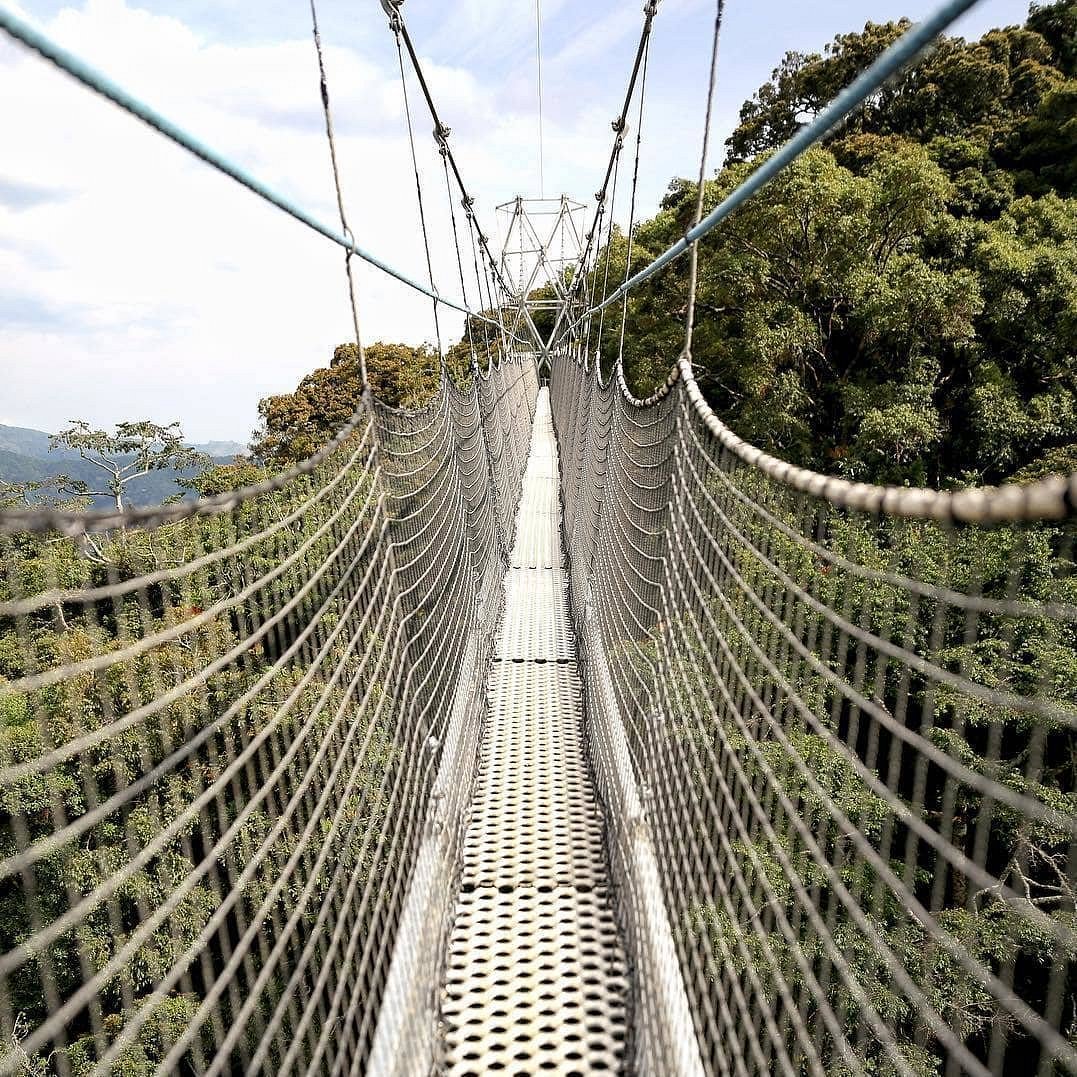
The famous canopy walkway allows visitors to see this remarkable environment from above. Suspended high over the forest floor, its bridges provide wide views of green hills, misty valleys, giant trees, orchids, ferns, and distant mountain ridges. At the same time, the journey to the bridge passes through a living rainforest filled with birds, butterflies, monkeys, and colourful plants.
However, the canopy walk is only one part of the experience. A complete Nyungwe Forest safari can also include chimpanzee trekking, colobus monkey tracking, waterfall hikes, birdwatching, tea plantation visits, cultural tours, and trips to Lake Kivu. Therefore, the destination works well for nature lovers, photographers, families, couples, solo travellers, and guests planning a longer Rwanda wildlife safari.
This detailed guide explains what to expect, how to prepare, when to travel, where to stay, and how to combine Nyungwe with Rwanda’s other major attractions.
Why Choose a Rwanda Safari with Nyungwe Canopy Walk?
A Rwanda Safari with Nyungwe Canopy Walk is ideal for travellers who want an active and varied journey. Rwanda is widely known for mountain gorilla trekking in Volcanoes National Park. Yet the country also protects a very different ecosystem in Nyungwe. Here, travellers exchange volcanic bamboo forests for thick tropical rainforest, deep valleys, tall trees, and winding hiking trails.
The canopy walkway adds a sense of adventure without requiring an extreme expedition. Visitors first follow a guided forest trail from the Uwinka Visitor Centre. Along the way, the guide explains the importance of the rainforest and helps the group identify birds, plants, insects, and possible primate movements. The walk then reaches a set of suspension bridges hanging above the forest.
From the bridge, the size of Nyungwe becomes clear. Forested ridges appear to continue far into the distance. Clouds may drift through the valleys, while sunlight creates changing colours across the treetops. Consequently, the experience is both peaceful and exciting.
Moreover, Nyungwe offers excellent value for travellers interested in several types of tourism. A single visit can support a Rwanda primate safari, an adventure holiday, a birdwatching tour, an educational journey, or a photography trip. It also combines easily with Kigali, Huye, Lake Kivu, Akagera National Park, and Volcanoes National Park.
Most importantly, the safari introduces visitors to another side of Rwanda. The country’s forests, tea plantations, communities, museums, and mountain roads show that a Rwanda tour can include much more than one famous wildlife activity.
Where Is Nyungwe National Park?
Nyungwe National Park is in southwestern Rwanda, near the border with Burundi. It lies between Huye and the Lake Kivu region, making it possible to include the forest within a broader Rwanda safari itinerary.
Many tours begin in Kigali. From the capital, the drive to Nyungwe usually takes several hours, depending on traffic, road conditions, stops, and the location of the selected lodge. Although the journey is long, it passes through some of Rwanda’s most attractive countryside. Guests see rolling hills, cultivated valleys, small towns, roadside markets, and extensive tea fields.
Travellers often stop in Huye, formerly called Butare. The city is home to Rwanda’s Ethnographic Museum, which presents traditional tools, clothing, architecture, crafts, music, and social history. A visit can add valuable cultural context before entering the rainforest.
Another possible stop is the King’s Palace Museum in Nyanza. Here, guests can learn about Rwanda’s former royal traditions and see reconstructions of traditional palace buildings. Depending on the available time, a tour may include one museum on the outward journey and another during the return to Kigali.
Visitors arriving from Lake Kivu can reach Nyungwe from towns such as Rusizi or Karongi. Therefore, Nyungwe fits naturally into a circular Rwanda safari route that connects Kigali, the southern cultural corridor, the rainforest, Lake Kivu, and Volcanoes National Park.
Understanding the Nyungwe Canopy Walk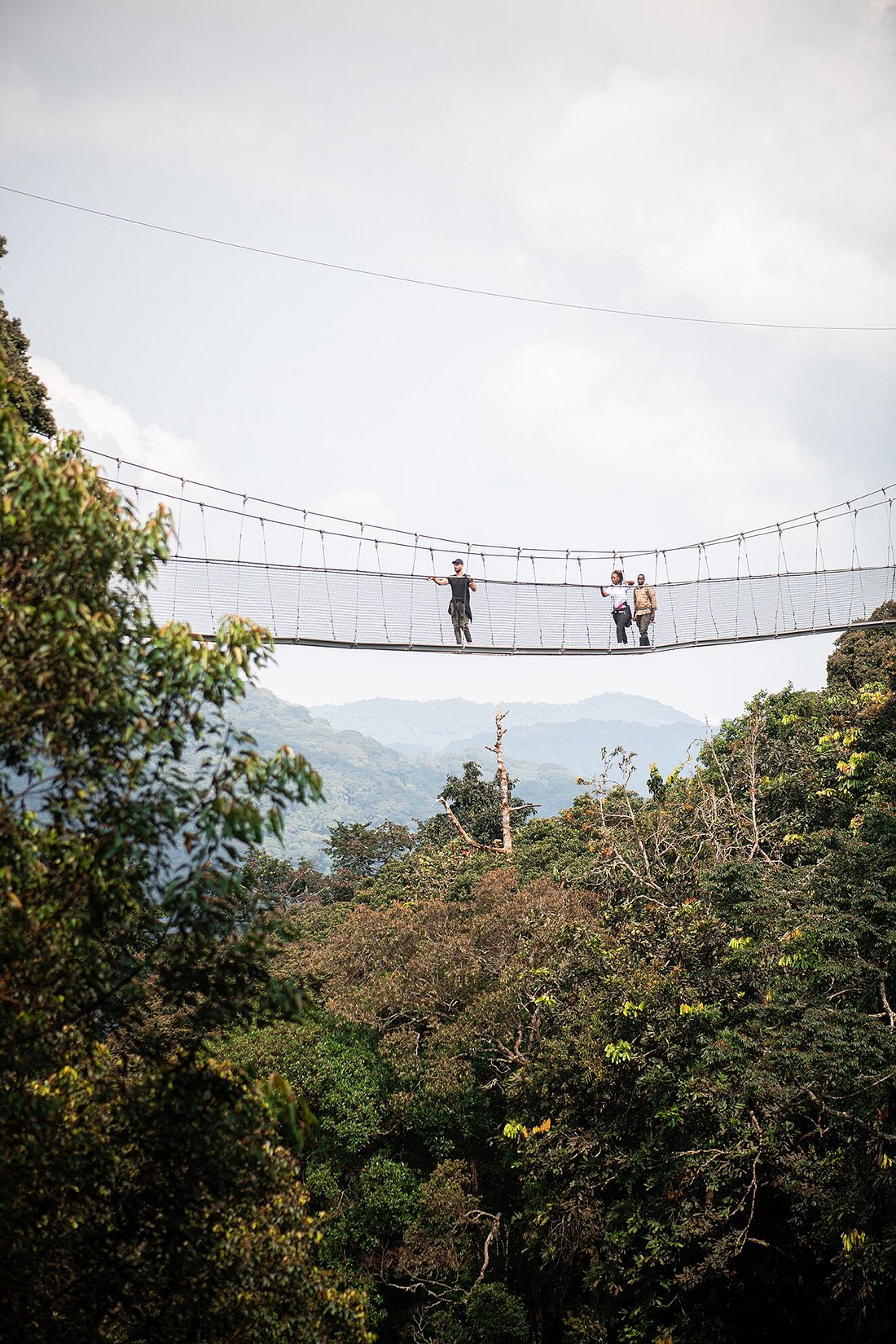
The Nyungwe canopy walkway is one of Rwanda’s most distinctive tourism attractions. It forms part of a guided forest experience near the Uwinka Visitor Centre. Rather than beginning directly on the bridge, the activity includes a hike through the rainforest. This approach makes the journey as rewarding as the final viewpoint.
The walkway consists of suspended bridge sections above the forest. At its highest points, visitors look down over layers of vegetation and across the surrounding mountains. The bridge can move slightly as people walk, which adds excitement to the experience. Nevertheless, guests receive guidance before crossing and should follow the ranger’s instructions throughout the activity.
The Visit Rwanda canopy walkway guide notes that the forest walk can reveal butterflies, orchids, colourful birds, and possible primate encounters. However, wildlife sightings on the canopy excursion are never guaranteed. Travellers who particularly want to see chimpanzees or monkeys should book a dedicated primate-tracking activity.
The canopy walk is more than a place for photographs. It provides a different way to understand the rainforest. From the ground, thick vegetation can limit long-distance views. From above, visitors can study the structure of the forest and see how the canopy spreads across ridges and valleys.
For this reason, the Nyungwe canopy walkway appeals to photographers, birdwatchers, conservation students, families, and adventure travellers. It also suits visitors who want a memorable forest experience but may not have enough time for a longer waterfall hike.
The Experience of Walking Above Nyungwe Forest
A typical canopy walk begins with registration and a briefing at the designated reception point. A park guide explains the route, expected conditions, and safety procedures. The group then enters the forest together.
The first section follows a natural trail. Depending on recent weather, the path may be dry, soft, muddy, or slippery. Tree roots and uneven ground are common. Therefore, proper walking shoes provide more security than sandals or smooth-soled casual footwear.
As the hike continues, the sounds of the road fade away. Bird calls, insects, moving leaves, and distant primate cries replace them. Giant ferns grow beside the path, while mosses, vines, and orchids cover parts of the forest. The guide may stop to discuss medicinal plants, tree species, pollination, or the role of the forest in protecting water sources.
Eventually, the trail reaches the suspension bridges. Some travellers cross quickly, while others prefer to move slowly and enjoy the view. Both approaches are acceptable as long as everyone respects the ranger’s directions and other guests.
On a clear day, the canopy creates a wide green panorama. During misty weather, the bridge can feel as though it is floating through the clouds. Light rain also changes the forest atmosphere by deepening the colours and increasing the scent of wet vegetation.
After the crossing, the group continues along the trail and returns to the visitor centre. The full duration depends on the selected route, walking speed, group size, trail conditions, and time spent observing nature.
Is the Nyungwe Canopy Walk Difficult?
The Nyungwe canopy walk requires a moderate level of mobility. Visitors must hike through natural forest terrain before reaching the bridge. The route can include slopes, steps, roots, and muddy sections. However, it is generally less demanding than many long Nyungwe hiking trails.
People who walk regularly and feel comfortable on uneven paths can usually enjoy the excursion. Still, each visitor should consider personal health, balance, and comfort with heights before booking. Travellers with medical concerns should seek suitable professional advice and inform their tour operator before arrival.
The bridge itself may be the most challenging section for guests who dislike heights. Looking forward instead of down often helps. Walking slowly, holding the side supports, and following the guide’s instructions can also make the crossing more comfortable.
Families should confirm the latest participation rules when booking. Children must be able to follow safety instructions and manage the forest trail. In addition, parents should consider whether each child feels comfortable on a suspended bridge.
Visitors should never rush because another group member moves faster. A good guide maintains a steady pace and allows reasonable time for rest, photography, and observation.
Best Time for a Rwanda Safari with Nyungwe Canopy Walk
A Rwanda Safari with Nyungwe Canopy Walk can take place throughout the year. Nyungwe is a rainforest, so visitors should always prepare for possible rain. Nevertheless, seasonal conditions can influence trail surfaces, visibility, photography, and the overall walking experience.
June to September
The long dry season usually runs from approximately June to September. These months often provide easier hiking conditions because trails may be less muddy. Consequently, this period is popular for canopy walks, chimpanzee trekking, birdwatching, and longer nature hikes.
Clearer skies can also improve wide landscape views from the bridge. However, Nyungwe’s mountain climate remains changeable. A rain jacket is still necessary, even when the forecast appears favourable.
Because these months are popular for Rwanda safaris, travellers should reserve accommodation, activities, vehicles, and guides early.
December to February
A shorter dry period often occurs between December and February. This can also be a good season for a Nyungwe Forest tour. Trail conditions may be comfortable, while the rainforest remains green and visually impressive.
Holiday travel can increase demand during late December and early January. Therefore, early planning is helpful for travellers with fixed dates.
March to May
The main rainy season generally falls between March and May. Rain can make some forest paths muddy and slippery. Nevertheless, the wet season has several advantages.
The forest appears exceptionally lush, waterfalls may carry more water, and mist can create dramatic photography. Birding can also be rewarding. In addition, fewer visitors may create a quieter atmosphere.
Travellers during this period should pack waterproof clothing, protect cameras and phones, and allow flexibility in the itinerary.
October and November
October and November often bring shorter seasonal rains. Conditions can change quickly between sunshine, cloud, and showers. Even so, a well-prepared visitor can still enjoy the canopy walkway and other Nyungwe activities.
Ultimately, there is no single perfect month for every traveller. The best time depends on personal interests, budget, available dates, and comfort with wet trails.
Nyungwe Canopy Walk and Chimpanzee Trekking
Many travellers combine the canopy walkway with chimpanzee trekking. This pairing creates one of Rwanda’s strongest rainforest itineraries. The canopy walk focuses on scenery, forest structure, plants, birds, and views. Chimpanzee trekking, in contrast, focuses on locating a habituated primate community with trained trackers and guides.
Chimpanzee trekking usually begins early in the morning. According to Visit Rwanda’s primate-tracking information, the terrain may be steep, slippery, and muddy. Tracking time can vary because chimpanzees move through the forest while searching for food.
Guests often hear chimpanzees before they see them. Their calls can travel through the forest, helping trackers estimate their direction. Once a group is located, visitors observe under strict rules and within the permitted viewing period.
Chimpanzees are active and may move quickly between trees. Therefore, the experience differs from gorilla trekking. Mountain gorillas often spend long periods feeding or resting in one area. Chimpanzees can travel rapidly, climb high into the canopy, or disappear behind thick vegetation.
A strong itinerary schedules chimpanzee trekking in the morning and the canopy walk later in the day, provided that timings and fitness levels allow. However, some travellers prefer to place the activities on separate days. This creates more time to rest and reduces pressure if chimpanzee tracking takes longer than expected.
Colobus Monkey Tracking in Nyungwe
Nyungwe is famous for its primate diversity. Besides chimpanzees, the forest supports black-and-white colobus monkeys, L’Hoest’s monkeys, blue monkeys, vervet monkeys, and other species.
Colobus monkey tracking is an excellent addition to a Rwanda Safari with Nyungwe Canopy Walk. Black-and-white colobus monkeys have striking coats and long tails. They often move through the trees in groups, creating rewarding opportunities for wildlife observation and photography.
This activity can appeal to travellers who want more primate experiences after chimpanzee trekking. It may also suit guests who prefer a different pace or wish to explore another section of the forest.
Although colobus sightings can be good, all wildlife remains wild. Weather, food availability, forest conditions, and animal movement affect each trek. Therefore, travellers should enjoy the full forest journey rather than judge the activity only by the number of photographs collected.
Birdwatching in Nyungwe National Park
Nyungwe is one of Rwanda’s leading birding destinations. Its location in the Albertine Rift makes it especially important for regional endemic species. Dense forest, bamboo zones, wetlands, open ridges, and forest edges provide habitats for a wide range of birds.
A guided Nyungwe birdwatching safari may reveal turacos, sunbirds, flycatchers, forest warblers, hornbills, barbets, and many other species. Some birds stay high in the canopy, while others feed near trails or forest clearings.
The canopy walkway can offer useful views into the upper forest layers. However, serious birdwatchers should also reserve a dedicated birding excursion. A specialist guide can identify calls, choose suitable trails, and adjust the pace for observation.
Morning often brings high bird activity. Still, conditions vary according to weather, season, elevation, and habitat. Binoculars are essential, while a camera with a suitable zoom lens helps capture distant subjects.
Birdwatchers planning a broader Rwanda tour can combine Nyungwe with Akagera National Park, Lake Kivu, Volcanoes National Park, and Kigali’s wetlands. This route covers several ecosystems and creates a highly varied Rwanda birding safari.
Hiking Trails in Nyungwe National Park
The canopy walkway attracts many visitors, but Nyungwe also contains an extensive network of guided hiking trails. These routes vary in length, scenery, and physical difficulty.
Igishigishigi Trail
The Igishigishigi Trail is closely associated with the canopy walkway. It passes through attractive forest and provides an accessible introduction to Nyungwe’s vegetation. Tree ferns are a notable feature of the route.
This trail works well for first-time visitors, photographers, and travellers with limited time. However, “shorter” does not mean completely flat. Guests should still expect natural forest surfaces and changing weather.
Isumo Waterfall Trail
The Isumo Waterfall Trail is one of Nyungwe’s best-known hiking experiences. It takes visitors through rainforest landscapes toward a scenic waterfall. Along the way, hikers may see streams, ferns, birds, butterflies, and primates.
Because the trail takes longer than the standard canopy excursion, guests need suitable footwear, water, and enough time. A packed snack or lunch may also be useful, depending on the schedule.
Kamiranzovu Marsh Trail
The Kamiranzovu area introduces visitors to another ecosystem within Nyungwe. Its wetland scenery contrasts with the dense forest found on other routes. Birdwatchers, plant lovers, and visitors interested in ecology may find this trail especially rewarding.
Bigugu Trail
Mount Bigugu represents a more demanding hiking option. The route reaches higher ground and can provide wide views in suitable weather. It is best for active travellers who have enough time and feel comfortable with longer forest hikes.
Source of the Nile Trail
Some Nyungwe itineraries explore areas linked with the headwaters of the Nile system. Such walks combine scenery with geographical interest. A guide can explain how the forest captures rainfall and supplies water to rivers, communities, farms, and ecosystems.
Because trail access and operating arrangements can change, visitors should confirm the latest options before finalising a Rwanda hiking safari.
Wildlife and Biodiversity in Nyungwe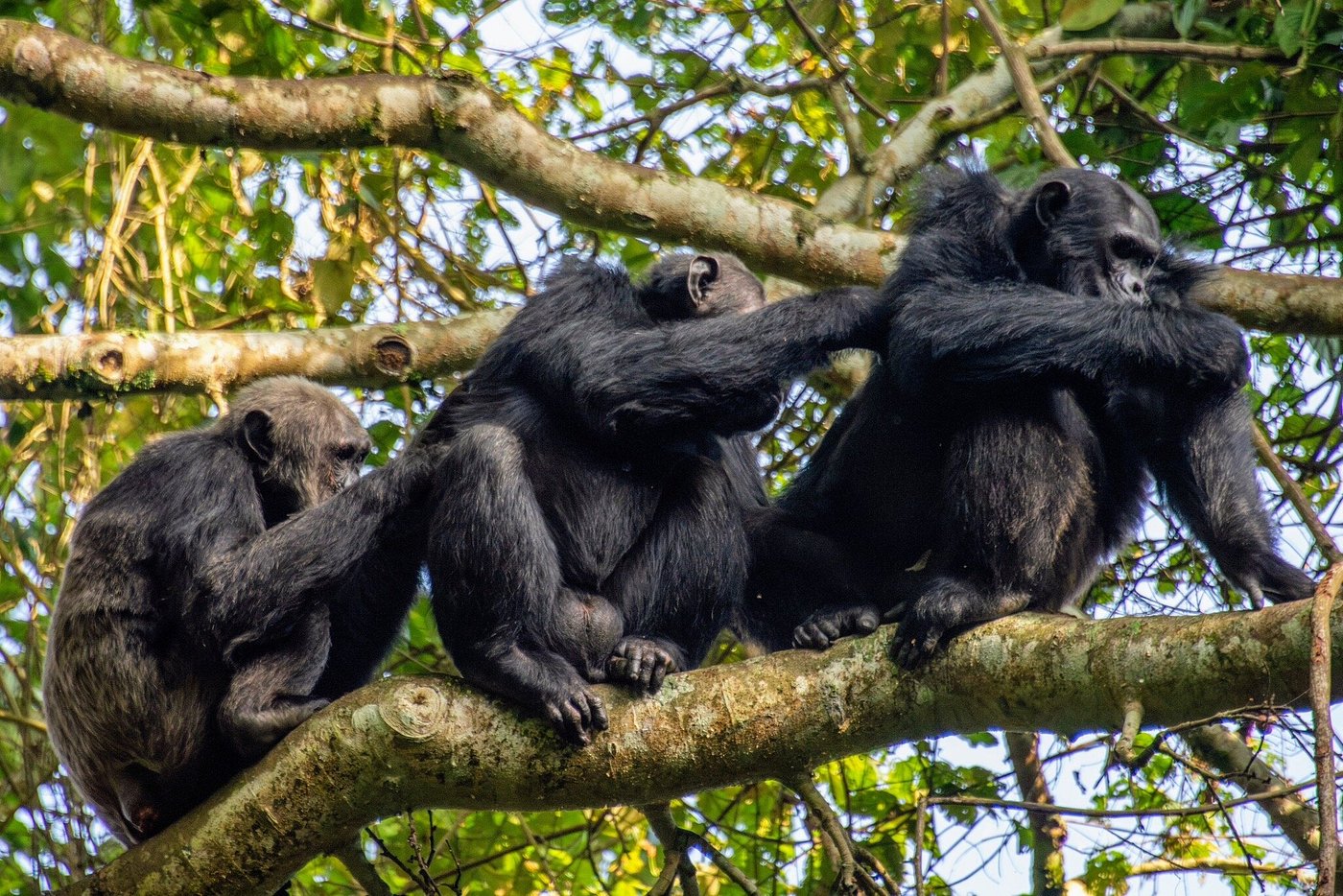
Nyungwe is a biodiversity hotspot. Its landscapes include montane forest, bamboo, wetlands, grasslands, and deep valleys. This range of habitats supports primates, forest mammals, birds, reptiles, amphibians, insects, and a rich collection of plants.
Thirteen primate species are associated with Nyungwe. Chimpanzees and colobus monkeys receive the most tourism attention, but other monkeys may appear along roads, forest trails, or treetops.
The park also protects orchids, giant ferns, moss-covered trees, colourful butterflies, and many smaller organisms that help the forest function. Pollinators support plant reproduction, while insects and fungi break down organic material. Birds spread seeds, and healthy vegetation protects soil and water.
Large animals are more difficult to see because of the thick forest. Therefore, Nyungwe should not be approached like an open savannah game drive. The reward comes from observing signs, sounds, movement, and ecological relationships.
A guided walk turns details that might appear ordinary into meaningful discoveries. A leaf, footprint, call, nest, or broken branch can reveal how animals use the forest. As a result, the experience becomes richer when visitors slow down and listen.
Combining Nyungwe with Lake Kivu
Lake Kivu is a natural addition to a Nyungwe safari. Travellers can move between the rainforest and lakeside destinations such as Rusizi, Karongi, or Rubavu, depending on the wider route.
After several active forest experiences, a Lake Kivu stay provides time to rest. Guests can enjoy boat trips, island visits, kayaking, coffee tours, fishing-community experiences, or quiet views from a lakeside lodge.
Rusizi is convenient for itineraries using the southwestern side of Nyungwe. Karongi works well for guests continuing north toward Volcanoes National Park. The road between Nyungwe and Lake Kivu passes through beautiful hills and rural landscapes, although travel times should remain realistic.
A Rwanda safari combining Nyungwe and Lake Kivu offers strong contrast. One day may involve muddy rainforest trails and primate calls. The next can include calm water, coffee farms, fishing boats, and sunset views.
Combining Nyungwe with Gorilla Trekking
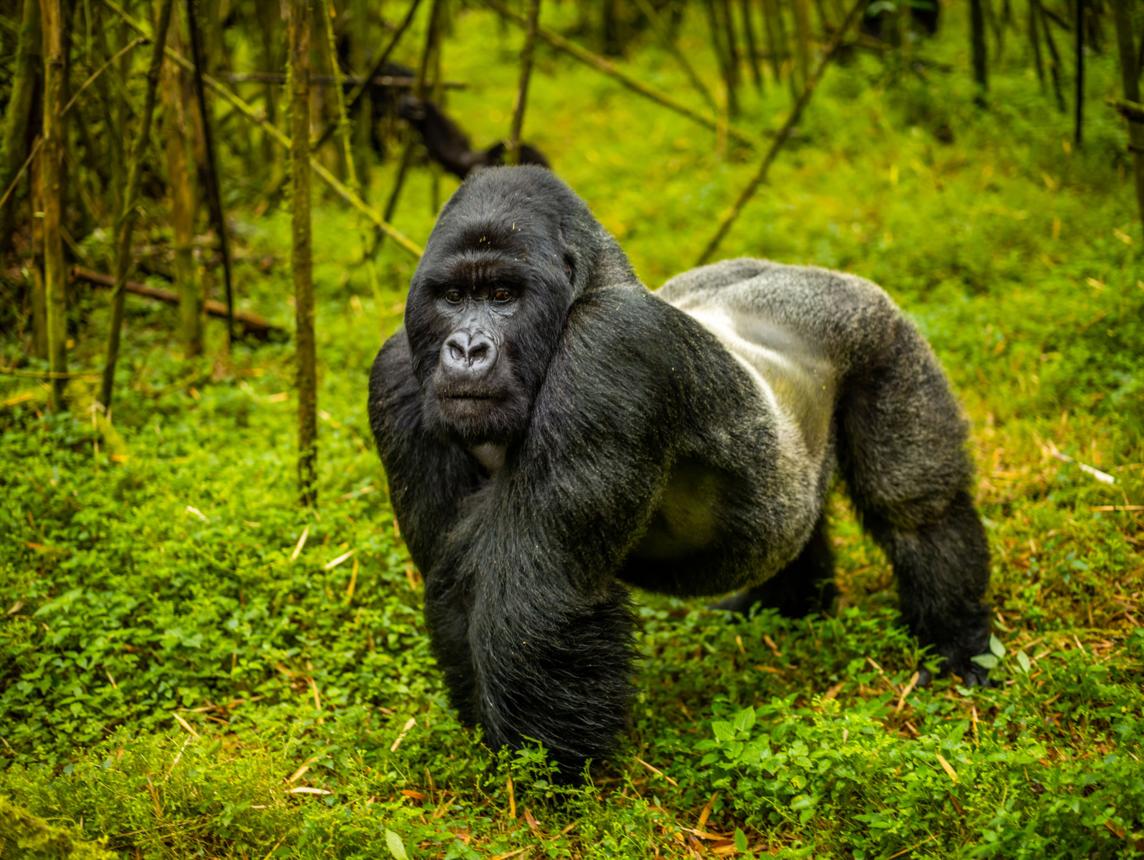
A combined gorilla and chimpanzee safari is one of Rwanda’s signature travel experiences. It brings together Volcanoes National Park in the north and Nyungwe National Park in the southwest.
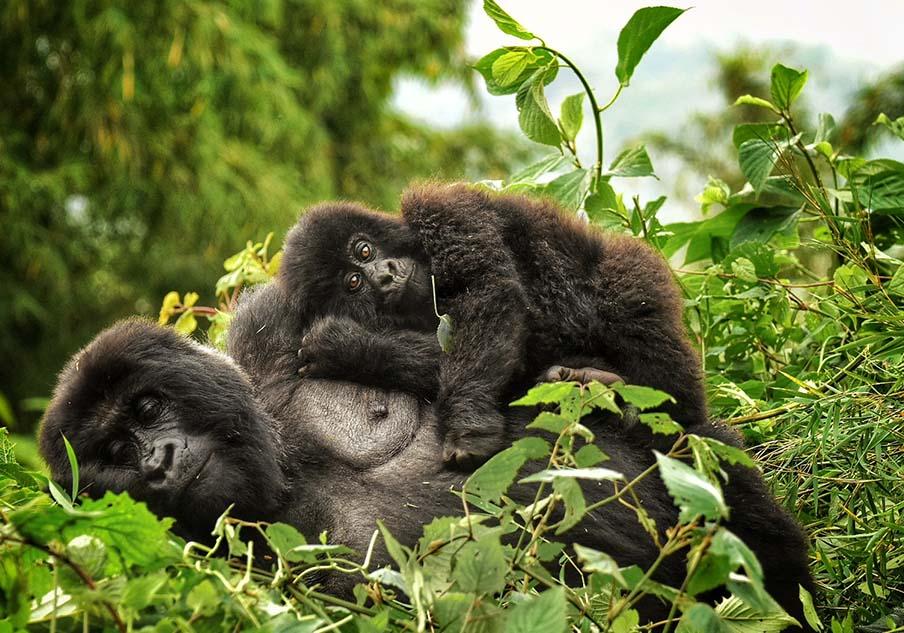
Volcanoes National Park protects mountain gorillas and golden monkeys within the Virunga landscape. Nyungwe protects chimpanzees, colobus monkeys, and a different collection of Albertine Rift wildlife.
The long road journey between the parks can be divided with an overnight stay near Lake Kivu. This reduces driving pressure and adds another destination to the itinerary.
A typical route may begin in Kigali, continue to Nyungwe through Huye, travel north along Lake Kivu, and finish in Volcanoes National Park. Alternatively, the journey can operate in reverse.
Travellers should book primate permits early, especially during busy travel periods. Gorilla permits and chimpanzee permits are separate from the canopy walkway reservation. Accommodation near each park should also match the activity schedule because early morning departures are common.
Combining Nyungwe with Akagera National Park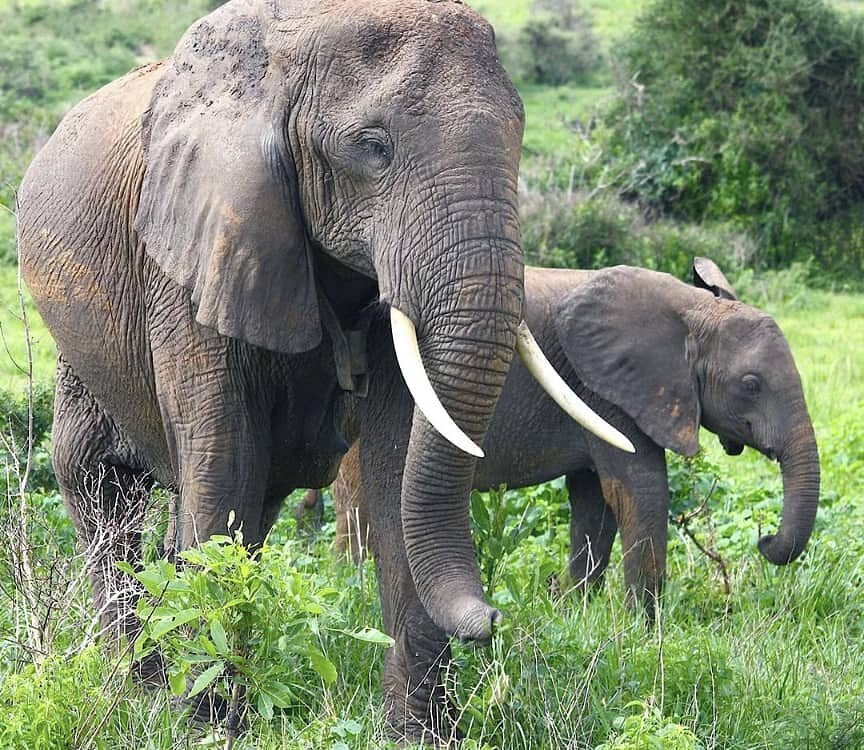
Akagera National Park offers open savannah, lakes, wetlands, and traditional game drives. It provides a complete contrast to Nyungwe’s rainforest.
A combined Akagera and Nyungwe safari allows travellers to search for large mammals in eastern Rwanda before exploring primates and forest wildlife in the southwest. Akagera is associated with animals such as elephants, buffaloes, lions, rhinos, giraffes, zebras, antelopes, hippos, and crocodiles. Sightings always depend on nature and local conditions.
Because the two parks lie in different parts of Rwanda, the itinerary should include enough time for travel. Kigali often works as a convenient connection point. A longer route can then continue to Volcanoes National Park for gorilla trekking.
A Rwanda national parks safari covering Akagera, Nyungwe, and Volcanoes creates one of East Africa’s most diverse compact journeys. Visitors experience savannah, rainforest, lakes, wetlands, volcanoes, primates, and cultural sites within one country.
Suggested 3-Day Rwanda Safari with Nyungwe Canopy Walk
Day 1: Kigali to Nyungwe National Park
After breakfast, meet your driver-guide in Kigali and begin the journey toward southern Rwanda. The road passes through hills, farming communities, and growing towns.
Depending on the selected program, stop at the King’s Palace Museum in Nyanza or the Ethnographic Museum in Huye. After the cultural visit, continue toward Nyungwe National Park. Tea plantations begin to appear as the route approaches the forest.
Arrive at the lodge in the afternoon or evening. After check-in, enjoy dinner and prepare for the following day’s activities.
Day 2: Chimpanzee Trekking and Canopy Walk
Wake up early and travel to the chimpanzee-tracking briefing point. Meet the park team, review the trekking rules, and begin the guided search.
The trek may last from a short period to several hours because chimpanzees move through their natural habitat. Once located, observe them according to the park’s viewing rules.
Return to the lodge or visitor centre for lunch and rest. Later, proceed to Uwinka for the canopy walkway experience. Hike through the forest, cross the suspended bridges, and enjoy views over Nyungwe’s treetops.
After the activity, return to the lodge for dinner and overnight.
Day 3: Nyungwe to Kigali
Enjoy breakfast before starting the return journey to Kigali. Depending on the schedule, stop at a tea plantation, local community project, or cultural attraction.
Arrive in Kigali in the afternoon or evening. The driver can transfer guests to a hotel or Kigali International Airport, subject to the flight schedule.
Suggested 5-Day Nyungwe and Lake Kivu Safari
Day 1: Kigali, Nyanza and Huye
Leave Kigali and drive south. Visit the King’s Palace Museum or another cultural site in Nyanza. Continue to Huye for the Ethnographic Museum before travelling toward Nyungwe.
Day 2: Chimpanzee Trekking
Begin the day with early morning chimpanzee trekking. Later, relax at the lodge or take a short guided nature walk.
Day 3: Nyungwe Canopy Walk and Tea Experience
Complete the canopy walkway excursion in the morning. In the afternoon, visit a tea plantation to learn about cultivation, leaf picking, processing, and Rwanda’s tea industry.
Day 4: Nyungwe to Lake Kivu
Travel to Lake Kivu. After arrival, enjoy a boat tour, community experience, or relaxed afternoon beside the water.
Day 5: Return to Kigali
Drive back to Kigali through Rwanda’s scenic western countryside. Depending on the route and departure time, include a coffee experience or local lunch stop.
Suggested 7-Day Rwanda Primate Safari
Day 1: Arrival in Kigali
Meet your guide at Kigali International Airport and transfer to the hotel. If time allows, receive a short safari briefing.
Day 2: Kigali to Nyungwe
Visit a cultural or historical attraction on the road to Nyungwe. Arrive at the forest lodge before dinner.
Day 3: Chimpanzee Trekking
Track chimpanzees with professional guides. Spend the afternoon resting or exploring the lodge surroundings.
Day 4: Canopy Walk and Colobus Experience
Complete the canopy walkway excursion. Depending on permits and timing, add colobus monkey tracking or a guided birding walk.
Day 5: Nyungwe to Lake Kivu
Drive to Lake Kivu and enjoy an afternoon boat trip or coffee experience.
Day 6: Lake Kivu to Volcanoes National Park
Continue north toward Musanze and Volcanoes National Park. Visit a cultural centre or conservation attraction if time allows.
Day 7: Gorilla Trekking and Return to Kigali
Attend the morning briefing and begin gorilla trekking. After the experience, return to Kigali or continue to an additional overnight stay, depending on the departure plan.
Accommodation near Nyungwe National Park
Accommodation around Nyungwe ranges from simple guesthouses to comfortable midrange properties and high-end forest lodges. The best choice depends on budget, desired comfort, travel style, and activity location.
Budget travellers can select modest lodges or guesthouses outside the park. These properties usually provide clean rooms, private or shared facilities, and basic meals. However, guests should confirm driving times to early morning briefing points.
Midrange Nyungwe lodges generally offer private bathrooms, restaurants, garden areas, and comfortable beds. They are suitable for travellers who want a balance between price and convenience.
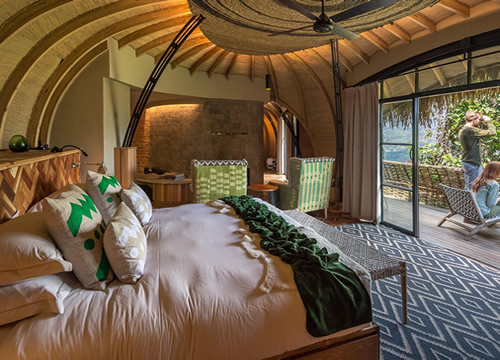
Luxury travellers can choose premium properties with high service levels, spacious rooms, quality dining, wellness facilities, and curated activities. Some lodges stand near tea plantations or forest edges, creating attractive views and easy access to nature.
Location matters as much as room quality. Chimpanzee tracking may begin from different areas, while the canopy walk is associated with Uwinka. Therefore, the planned activities should guide the accommodation choice.
Travellers should also check meal arrangements. Full-board accommodation can be convenient because restaurant choices are limited near parts of the park. An early packed breakfast may be necessary on chimpanzee-tracking mornings.
What to Pack for the Nyungwe Canopy Walk
Packing correctly makes a Nyungwe safari safer and more comfortable. Rainforest conditions can change quickly, while trails may remain wet after earlier showers.
Wear sturdy walking shoes with reliable grip. Lightweight hiking boots are ideal, particularly during rainy periods. Long trousers protect the legs from plants, mud, and insects. A breathable long-sleeved shirt provides similar protection for the arms.
Carry a light waterproof jacket rather than relying only on an umbrella. An umbrella can be awkward on narrow forest paths and cannot always be used on the bridge.
A small daypack is useful for water, snacks, a camera, spare batteries, and personal items. Place electronics inside waterproof covers or sealed bags. Even a brief shower can damage unprotected equipment.
Other useful items include insect repellent, sunscreen, a hat, binoculars, walking gloves, reusable water bottles, and any required personal medication.
Avoid packing more than necessary for the walk. A heavy bag can become uncomfortable on slopes. When permitted and available, local porters can provide valuable support during demanding activities while also benefiting from tourism income.
Photography Tips for the Nyungwe Canopy Walk
Nyungwe offers excellent landscape and wildlife photography. However, rainforest light can be difficult. Bright sky may appear above dark vegetation, while mist and moving subjects create additional challenges.
A wide-angle lens works well for the bridge and forest panoramas. A zoom lens is useful for birds and monkeys. Travellers carrying only a phone can still capture strong images by using the bridge lines to frame the forest.
Protect the camera from rain and moisture. Keep a dry cloth available for the lens. Moreover, use a strap because the bridge moves and items can slip from the hand.
Wildlife photographers should avoid flash unless park rules clearly permit it. Flash can disturb animals and rarely produces good results at long distances.
Take a few photographs, but also spend time observing without a screen. The wind, forest sounds, height, and changing light form an important part of the canopy experience.
Safety on a Nyungwe Forest Safari
Guided activities in Nyungwe follow park procedures. Visitors can support their own safety by listening carefully during briefings and staying with the group.
Do not leave marked routes or attempt an unguided forest walk. Nyungwe is a large natural environment with steep terrain, thick vegetation, and wild animals.
On the canopy bridge, keep a reasonable distance from other guests and follow any limits provided by the guide. Do not shake the bridge, climb on supports, or lean outside protected areas.
During primate tracking, maintain the required distance and follow all health rules. If a guest feels unwell before a primate activity, the guide must be informed. Human illnesses can present risks to primates because of their biological similarity to people.
Drink enough water and communicate early if you feel tired, dizzy, or uncomfortable. Guides can adjust the pace within reasonable limits, but they need clear information.
Travel insurance should cover the planned safari activities, medical needs, delays, and personal belongings. Guests should read the policy carefully because coverage varies between insurers.
Responsible Tourism in Nyungwe
Nyungwe protects wildlife, water sources, plants, and landscapes that support surrounding communities. Responsible tourism helps maintain these benefits.
Visitors should carry all waste out of the forest and avoid single-use plastics where possible. Nothing should be removed from the park, including flowers, leaves, stones, or feathers.
Wildlife must never be fed. Feeding changes natural behaviour and can introduce unhealthy food or disease. Guests should also keep voices low during animal encounters.
Using trained local guides, porters, lodges, cultural projects, and community businesses helps spread tourism income. Buying locally made crafts can provide further support, provided that products comply with conservation laws.
Photography of local people should always be respectful. Ask permission before taking close portraits, especially in villages, farms, or markets.
A responsible Rwanda eco-tour does not treat conservation as a background attraction. Instead, it recognises that the forest’s future depends on protection, science, community participation, and thoughtful visitor behaviour.
Rwanda Safari with Nyungwe Canopy Walk for Families
A family safari in Nyungwe can be educational and enjoyable. Children and teenagers can learn about rainforest layers, primate behaviour, birdlife, insects, plants, water conservation, and local culture.
However, parents should select activities according to age, fitness, and comfort with heights. The canopy bridge may excite one child and worry another. Discussing the experience in advance can help everyone prepare.
Families should also confirm current age limits for chimpanzee tracking and other activities. These rules protect both visitors and wildlife and may change.
A slower itinerary works best. Rather than combining several demanding activities in one day, families can separate chimpanzee trekking, the canopy walk, and cultural excursions. This reduces tiredness and creates more time for meals and rest.
Comfortable accommodation with reliable meal options is also important. Families should tell the lodge about dietary needs before arrival.
Rwanda Safari with Nyungwe Canopy Walk for Couples
A Rwanda Safari with Nyungwe Canopy Walk can be included in a private couple’s itinerary focused on nature, photography, and scenic travel. Private transport allows the schedule to move at a comfortable pace and creates flexibility for cultural stops.
Couples can combine the forest with Lake Kivu, where boat rides and lakeside accommodation offer a restful break. They may also continue to Volcanoes National Park for gorilla trekking or Akagera for a private wildlife safari.
Luxury lodges around Nyungwe can provide high levels of comfort after active forest walks. Meanwhile, midrange properties make the same wildlife experiences available at a lower overall cost.
The most successful itinerary balances activity with rest. Two or three consecutive early departures may become tiring. Adding a relaxed afternoon, spa treatment, tea experience, or lakeside stay can improve the journey.
Rwanda Safari with Nyungwe Canopy Walk for Solo Travellers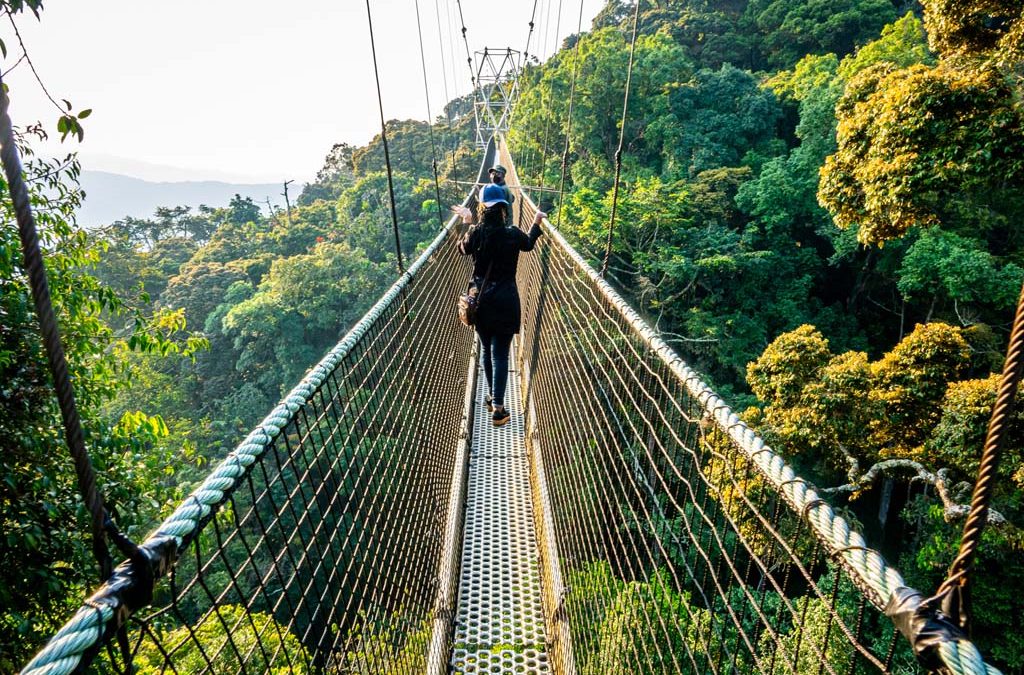
Solo travellers can visit Nyungwe through a private tour or, where available, a small shared departure. A private safari offers maximum flexibility but usually costs more because one person covers the vehicle and guide expenses.
Joining other travellers can reduce transport costs. However, shared tours follow fixed dates and may provide less freedom over accommodation and stopping points.
Nyungwe’s guided park activities provide a structured environment for solo guests. Visitors join authorised guides and may walk with other permit holders. Still, the road journey and accommodation arrangements should be organised carefully.
A reputable Rwanda tour operator can coordinate airport transfers, permits, hotels, meals, and activity times. This support is especially helpful when several briefing locations or early departures are involved.
Budget, Midrange and Luxury Nyungwe Safaris
The cost of a Nyungwe safari depends on the number of travellers, trip length, accommodation category, activities, transport standard, season, and starting point.
A budget safari normally uses simple accommodation and shared costs where possible. Meals may be basic, but the core forest activities remain the same.
A midrange Rwanda safari offers comfortable lodges, private rooms, reliable meals, and private road transport. This category suits many travellers because it balances price, comfort, and convenience.
A luxury Nyungwe safari may include premium lodges, high-end dining, private guiding, spacious vehicles, additional lodge experiences, or helicopter transfers. It reduces road travel time but increases the total cost significantly.
Permit and park fees can change. Therefore, travellers should request a current, itemised quotation rather than relying on an old online price. The quotation should clearly list accommodation, transport, meals, park entry, permits, guide services, and exclusions.
How Many Days Are Needed in Nyungwe?
Two nights provide a practical minimum for many visitors. This allows one full day for chimpanzee trekking and the canopy walkway, although the schedule may feel busy.
Three nights create a more balanced Nyungwe National Park safari. Guests can separate major activities and add colobus tracking, birdwatching, a waterfall hike, or a tea plantation tour.
Four or more nights suit keen hikers, birdwatchers, photographers, and travellers who prefer a slower pace. Extra time also provides flexibility if rain affects a planned trail.
When Nyungwe forms part of a full Rwanda safari, the total journey should usually include enough time for road transfers. Trying to visit Akagera, Nyungwe, Lake Kivu, and Volcanoes National Park in only a few days leads to long drives and limited time at each destination.
Booking a Rwanda Safari with Nyungwe Canopy Walk
Begin by choosing approximate travel dates and the number of days available. Next, decide whether Nyungwe will be the main destination or part of a larger Rwanda holiday.
List the most important activities. These may include the canopy walkway, chimpanzee trekking, colobus monkey tracking, birdwatching, waterfall hiking, tea tours, or Lake Kivu.
A tour operator can then design the route around activity times and accommodation locations. Once the program is agreed, confirm permit availability before making non-refundable flight arrangements.
The final quotation should explain what is included. Common inclusions may cover a private vehicle, professional driver-guide, accommodation, specified meals, park entry, permits, bottled drinking water, and airport transfers.
Common exclusions may include international flights, visas, travel insurance, optional activities, tips, personal purchases, and drinks not included by the lodge.
Before payment, read the booking conditions. Pay particular attention to cancellation rules, permit conditions, date-change policies, and refund terms.
Frequently Asked Questions
How high is the Nyungwe canopy walkway?
The bridge sections rise high above the forest floor, with widely published descriptions placing the highest point at approximately 70 metres. The exact feeling of height changes with the terrain below.
How long is the canopy walk?
The activity includes both the forest hike and the bridge crossing. Total duration varies according to the route, group speed, weather, and time spent observing nature.
Can I do the canopy walk and chimpanzee trekking on the same day?
Yes, it may be possible to schedule chimpanzee tracking early in the morning and the canopy walk later. However, separate days provide a more relaxed experience.
Is wildlife guaranteed on the canopy walk?
No. Visitors may see birds, butterflies, monkeys, and other wildlife, but sightings cannot be guaranteed. Dedicated primate tracking offers a more focused wildlife experience.
Is the canopy walk suitable for people afraid of heights?
That depends on the level of discomfort. The bridge is suspended and may move slightly. Guests should assess their comfort honestly and follow the guide’s advice.
What shoes should I wear?
Wear closed walking shoes or hiking boots with good grip. Trails may be muddy, wet, steep, or uneven.
Does it rain during the dry season?
Yes. Nyungwe is a rainforest, and showers can occur at any time. Carry a lightweight waterproof jacket throughout the year.
Can children join the canopy walk?
Family participation depends on current park rules and each child’s ability to manage the trail and follow safety instructions. Confirm the latest requirements before booking.
Do I need a guide?
Yes. Nyungwe forest activities operate with authorised guides. Visitors should not leave designated areas or hike independently.
When should I reserve?
Book as early as possible if travelling during peak seasons or combining the canopy walk with chimpanzee and gorilla permits.
Final Thoughts on a Rwanda Safari with Nyungwe Canopy Walk
A Rwanda Safari with Nyungwe Canopy Walk combines adventure, conservation, education, and beautiful scenery within one rewarding journey. Visitors do not simply look at Nyungwe from a distance. They walk beneath ancient trees, listen for primates, cross above the rainforest, and learn how the ecosystem supports wildlife and people.
The experience becomes even richer when combined with chimpanzee trekking, colobus monkey tracking, birdwatching, waterfall hikes, tea plantations, and Lake Kivu. Travellers with more time can add gorilla trekking in Volcanoes National Park and Big Five game drives in Akagera National Park.
Good planning is essential. The right itinerary should account for driving times, early activity departures, physical ability, accommodation location, changing weather, and permit availability. With those details in place, Nyungwe can become one of the most memorable parts of a Rwanda wildlife holiday.
For a customised itinerary, current permit information, accommodation options, and private transport, contact:
Universal Ventures Rwanda
KK 15 Rd, Kigali, Rwanda
Phone/WhatsApp: +250 781 441 853
Email: info@universalventuresrwanda.com
Website: www.universalventuresrwanda.com

Related Posts


Comments (0)